Hierarchy of Evidence
While this book is not a scientific text and won’t teach you how to dissect research papers, it is important to understand the hierarchy of evidence so you can evaluate the quality of the information presented. When a study is referenced in this book, it will typically be accompanied by a PMID (PubMed ID), a unique number assigned to studies indexed in the PubMed database, allowing you to look up the original research yourself.
The hierarchy of evidence is a system used to rank the strength of scientific research, typically represented as a pyramid.
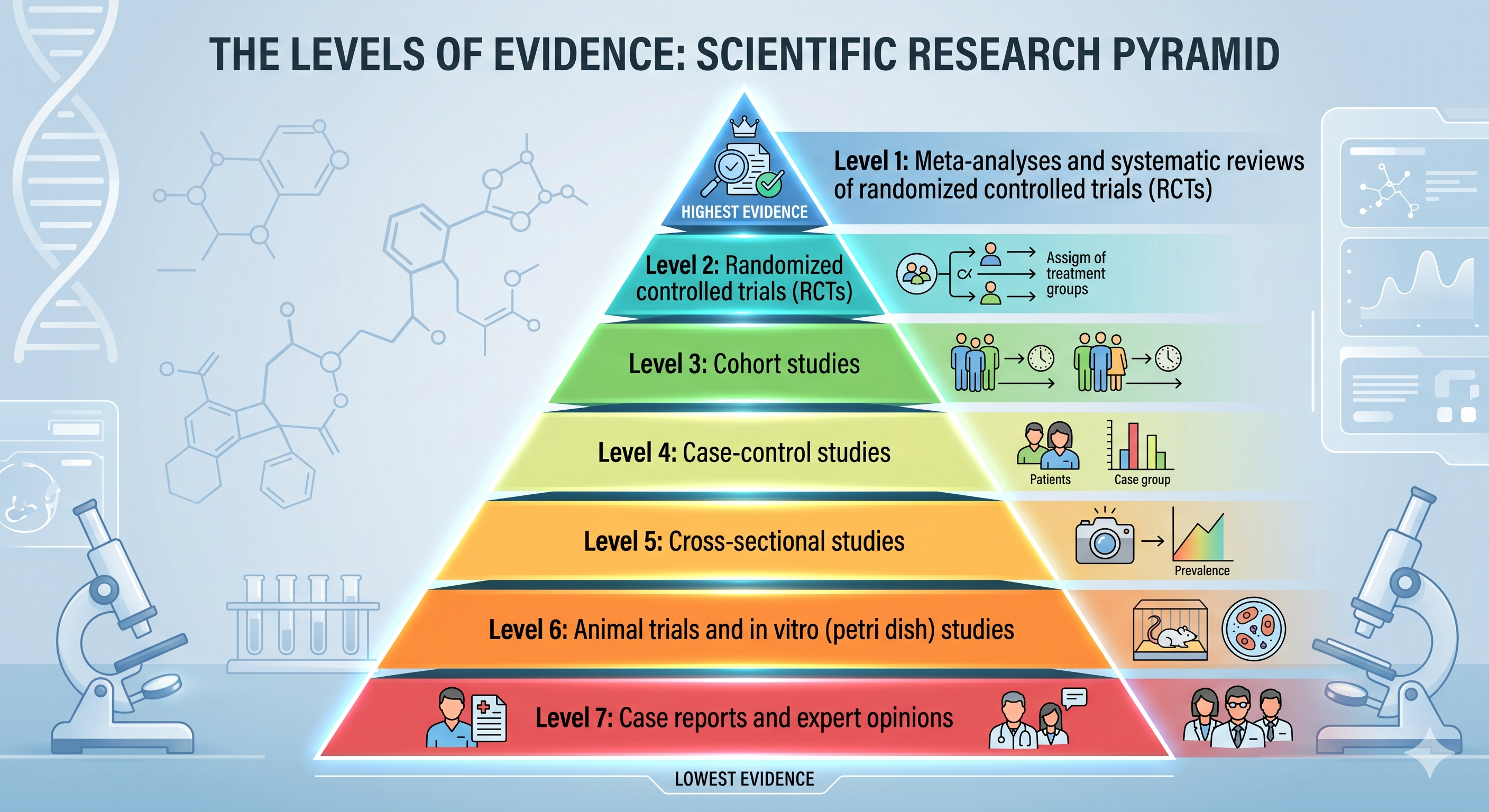
This book will primarily reference studies at Level 2 or above, avoiding evidence below Level 4 whenever possible. However, the hierarchy is not a perfect system. A poorly conducted RCT (Level 2) can provide weaker evidence than a well-designed cohort study (Level 3). Therefore, context matters.
Additionally, exercise physiology research faces unique challenges: long-term training studies are expensive, subjects are hard to recruit, and muscle biopsies are invasive. Because of this, we sometimes have to rely on acute mechanistic studies (Level 6) to understand how a process works (like mTORC1 signaling), even if we rely on long-term RCTs to prove that it works. The burden of critically evaluating this research has been done for you in this book, so you can focus on the practical application.