3.1 Regional Hypertrophy: How to influence where your muscles grow
Muscles do not grow uniformly as a single, shapeless block; instead, they exhibit regional hypertrophy, meaning growth can be biased toward specific areas within the muscle based on how it is trained. To understand this, we first need to define anatomical directions:
- Proximal refers to the region of a muscle closest to the center of the body or the root of the limb.
- Distal refers to the region furthest from the center of the body.
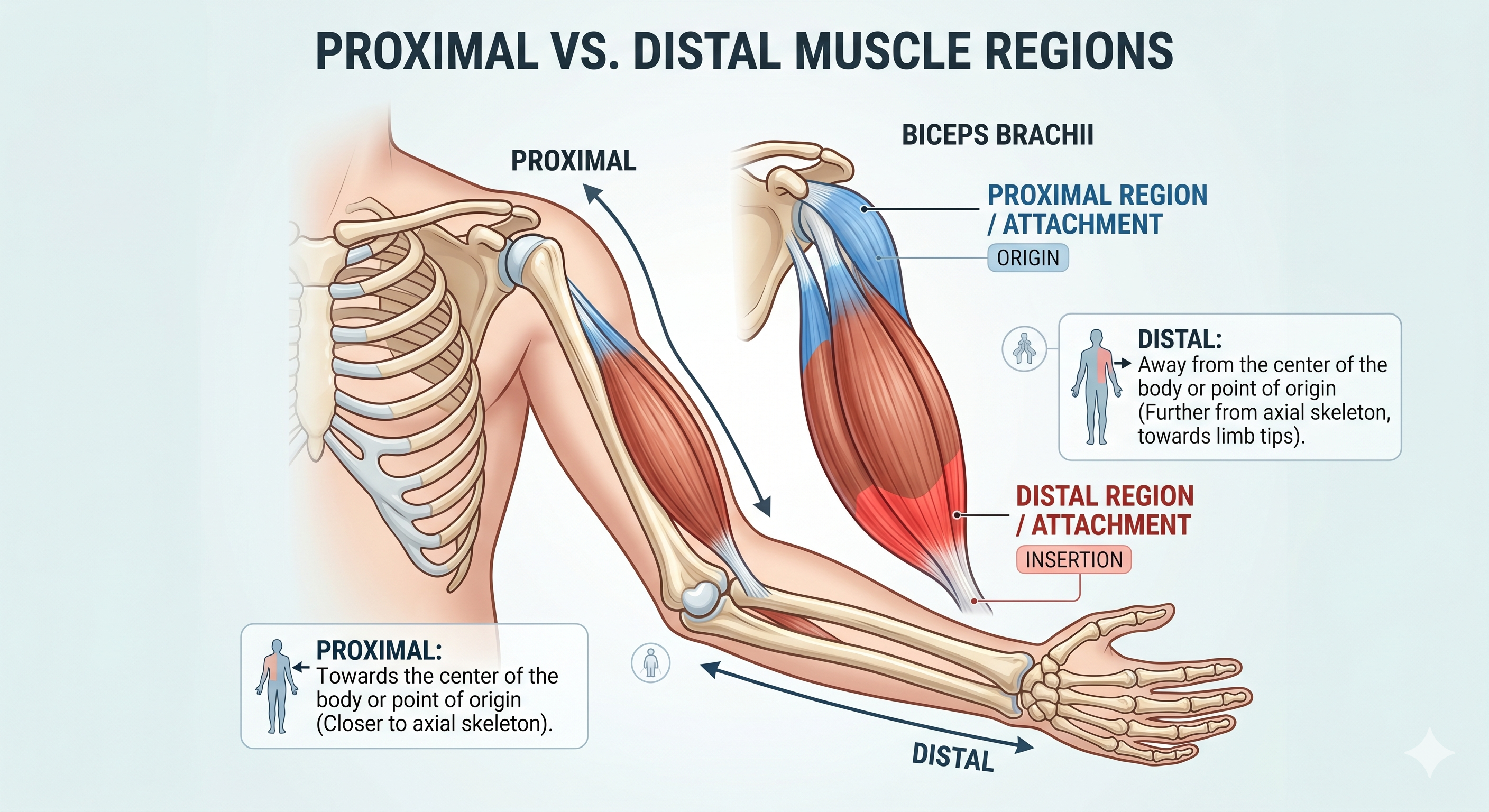
Whether we can influence where the growth happens is up for debate.
Two main theories have emerged to explain regional hypertrophy:
- Neuromechanical Matching (NMM): The brain recruits specific regions of a muscle based on leverage, meaning that different exercises can preferentially target proximal or distal fibers.
- Stretch-Mediated Hypertrophy (SMH): Growth is driven by passive tension from stretching, so certain regions of a muscle (distal) that experience more stretch during an exercise will grow more.
There is evidence supporting both models, and they are not mutually exclusive. In fact, they likely work together to some extent. The practical takeaway is that exercise selection matters for regional hypertrophy, and understanding the underlying mechanisms can help us make informed choices about which exercises to include in our training programs.